
.
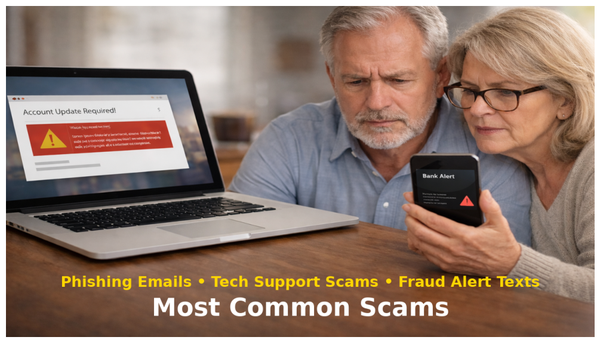
Medicare Scams
Scammers pose as Medicare representatives, insurance agents,or government
officials to obtain Medicare numbers or personal information. Some even
promise to lower your current Medicare plan cost by as much as 30%.
Impersonation Scams –
Scammers pretend to be from Social Security,
the IRS, a bank, Amazon, Apple, or a utility company.
Tech Support Scams
Fake computer warnings or calls claiming
a device or account has been compromised.
Romance and Relationship Scams
Scammers build trust through social media
or dating sites before requesting money.
Investment and Cryptocurrency Scams
Fraudulent investment opportunities
promising unusually high returns.
Family Emergency or Grandparent Scams
The caller claims a loved one urgently needs money.

Click the Image
How To Protect Yourself From Scams
Pause before taking action.
Verify the sources independently.
Protect your Medicare number.
Do not share personal information with unknown callers.
Never allow unknown individuals remote access to your computer.
Be cautious with unusual payment requests.
Discuss suspicious requests with someone you trust.
Report suspected scams to consumer protection agencies.
Scam Protection Basics
Medicare Basics
Medicare Planning
Resources
Federal Trade Commission
Medicare Fraud & Abuse
FBI Internet Crime Complaint Center
AARP Fraud Watch Network
National Council on Aging
If you know someone who might benefit from this information, please feel free
to share it with friends, family, clients, patients, employees, or others who may benefit.
Prepared as an educational resource by
Russ Swallow
Certified Senior Advisor
Licensed Insurance Adviser
508‑450‑2375
TheMedicareAdvisors.com